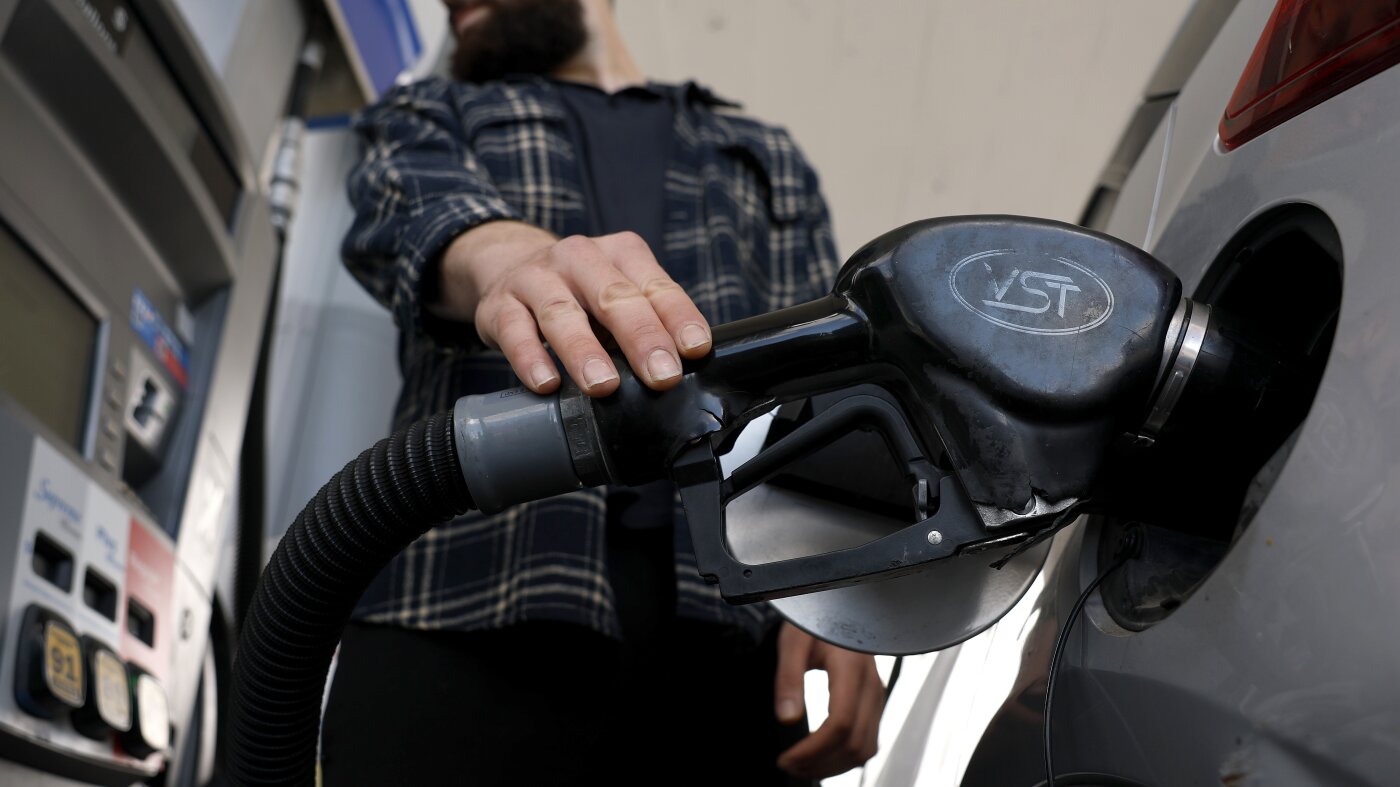
benchmark metrics Our platform focuses on simplifying stock market information through structured analysis of earnings, trends, and financial news. As the national average for a gallon of gasoline reaches $4.55 ahead of one of the busiest travel weekends of the year, consumers are exploring options to reduce fuel expenses. Driving slower, switching to electric vehicles, or avoiding driving altogether are among the strategies that may help individuals manage rising costs.
Live News
benchmark metrics Predictive analytics are increasingly used to estimate potential returns and risks. Investors use these forecasts to inform entry and exit strategies. The role of analytics has grown alongside technological advancements in trading platforms. Many traders now rely on a mix of quantitative models and real-time indicators to make informed decisions. This hybrid approach balances numerical rigor with practical market intuition. The latest available data from AAA shows that the national average gasoline price stands at $4.55 per gallon, coinciding with the approach of a major holiday travel period. This price level represents a significant increase compared to previous years, putting pressure on household budgets and travel plans. NPR’s reporting highlights several practical approaches that drivers might consider to cut fuel costs. One of the most straightforward methods is reducing driving speed, as fuel efficiency typically decreases at higher speeds. Additionally, transitioning to electric vehicles (EVs) could offer long-term savings on fuel, though the upfront cost and charging infrastructure remain considerations. Another option is simply not driving at all—using alternative transportation such as public transit, carpooling, or staying local may help avoid high gasoline expenses. The report notes that these strategies are especially relevant given the current price environment and the expected surge in travel demand during the upcoming holiday weekend. While no single solution fits all circumstances, the combination of behavioral changes and vehicle choices could potentially lead to meaningful savings for consumers.
Gas Prices Near $4.55 Average: Consumer Strategies to Manage Fuel Costs This Travel Weekend The role of analytics has grown alongside technological advancements in trading platforms. Many traders now rely on a mix of quantitative models and real-time indicators to make informed decisions. This hybrid approach balances numerical rigor with practical market intuition.Market anomalies can present strategic opportunities. Experts study unusual pricing behavior, divergences between correlated assets, and sudden shifts in liquidity to identify actionable trades with favorable risk-reward profiles.Gas Prices Near $4.55 Average: Consumer Strategies to Manage Fuel Costs This Travel Weekend Diversifying the sources of information helps reduce bias and prevent overreliance on a single perspective. Investors who combine data from exchanges, news outlets, analyst reports, and social sentiment are often better positioned to make balanced decisions that account for both opportunities and risks.Observing correlations across asset classes can improve hedging strategies. Traders may adjust positions in one market to offset risk in another.
Key Highlights
benchmark metrics Scenario planning based on historical trends helps investors anticipate potential outcomes. They can prepare contingency plans for varying market conditions. Some traders incorporate global events into their analysis, including geopolitical developments, natural disasters, or policy changes. These factors can influence market sentiment and volatility, making it important to blend fundamental awareness with technical insights for better decision-making. Key takeaways from the NPR report and broader market implications include: - Driving behavior and fuel economy: Reducing highway speeds by 5 to 10 miles per hour may improve fuel efficiency by 7% to 14% per gallon, according to estimates from the U.S. Department of Energy. This behavioral adjustment could be one of the most immediate ways to lower fuel consumption. - Electric vehicle adoption as a long-term strategy: While EVs currently represent a small fraction of U.S. vehicle sales, the high gasoline prices may accelerate consumer interest. However, factors such as vehicle availability, charging network expansion, and electricity costs could influence adoption rates. - Reduced travel demand: The option of avoiding trips entirely—through telework or local activities—might lower overall gasoline demand in the short term. If sustained, such shifts could have implications for energy markets and consumer spending patterns. - Broader economic impact: Elevated gasoline prices may reduce discretionary spending in other areas, potentially affecting retail, hospitality, and transportation sectors. Inflation concerns could also be heightened if fuel costs persist. The data underscores that consumer responses to high gas prices are varied and multifaceted, with potential ripple effects across the economy.
Gas Prices Near $4.55 Average: Consumer Strategies to Manage Fuel Costs This Travel Weekend Real-time updates are particularly valuable during periods of high volatility. They allow traders to adjust strategies quickly as new information becomes available.Predicting market reversals requires a combination of technical insight and economic awareness. Experts often look for confluence between overextended technical indicators, volume spikes, and macroeconomic triggers to anticipate potential trend changes.Gas Prices Near $4.55 Average: Consumer Strategies to Manage Fuel Costs This Travel Weekend Cross-market correlations often reveal early warning signals. Professionals observe relationships between equities, derivatives, and commodities to anticipate potential shocks and make informed preemptive adjustments.Observing correlations across asset classes can improve hedging strategies. Traders may adjust positions in one market to offset risk in another.
Expert Insights
benchmark metrics Expert investors recognize that not all technical signals carry equal weight. Validation across multiple indicators—such as moving averages, RSI, and MACD—ensures that observed patterns are significant and reduces the likelihood of false positives. Investors often experiment with different analytical methods before finding the approach that suits them best. What works for one trader may not work for another, highlighting the importance of personalization in strategy design. From a professional perspective, the $4.55 per gallon national average represents a level that historically has prompted changes in consumer behavior and market dynamics. Analysts suggest that sustained high gasoline prices could lead to a modest shift in vehicle purchasing preferences toward more fuel-efficient models, including hybrids and electric vehicles. However, the transition may be gradual due to supply chain constraints and consumer hesitation. For investors, the implications are nuanced. Companies in the energy sector may benefit from elevated oil and gasoline prices in the near term, but prolonged high prices could dampen economic activity and reduce demand over time. Conversely, firms involved in electric vehicle production, battery technology, or public transit infrastructure could see increased interest as consumers seek alternatives. It is important to note that market conditions are subject to a wide range of influences, including geopolitical events, production decisions by major oil-exporting countries, and domestic policy changes. While the current price environment creates opportunities for certain strategies, outcomes remain uncertain. Disclaimer: This analysis is for informational purposes only and does not constitute investment advice.
Gas Prices Near $4.55 Average: Consumer Strategies to Manage Fuel Costs This Travel Weekend Some traders use alerts strategically to reduce screen time. By focusing only on critical thresholds, they balance efficiency with responsiveness.Integrating quantitative and qualitative inputs yields more robust forecasts. While numerical indicators track measurable trends, understanding policy shifts, regulatory changes, and geopolitical developments allows professionals to contextualize data and anticipate market reactions accurately.Gas Prices Near $4.55 Average: Consumer Strategies to Manage Fuel Costs This Travel Weekend Historical precedent combined with forward-looking models forms the basis for strategic planning. Experts leverage patterns while remaining adaptive, recognizing that markets evolve and that no model can fully replace contextual judgment.Visualization tools simplify complex datasets. Dashboards highlight trends and anomalies that might otherwise be missed.